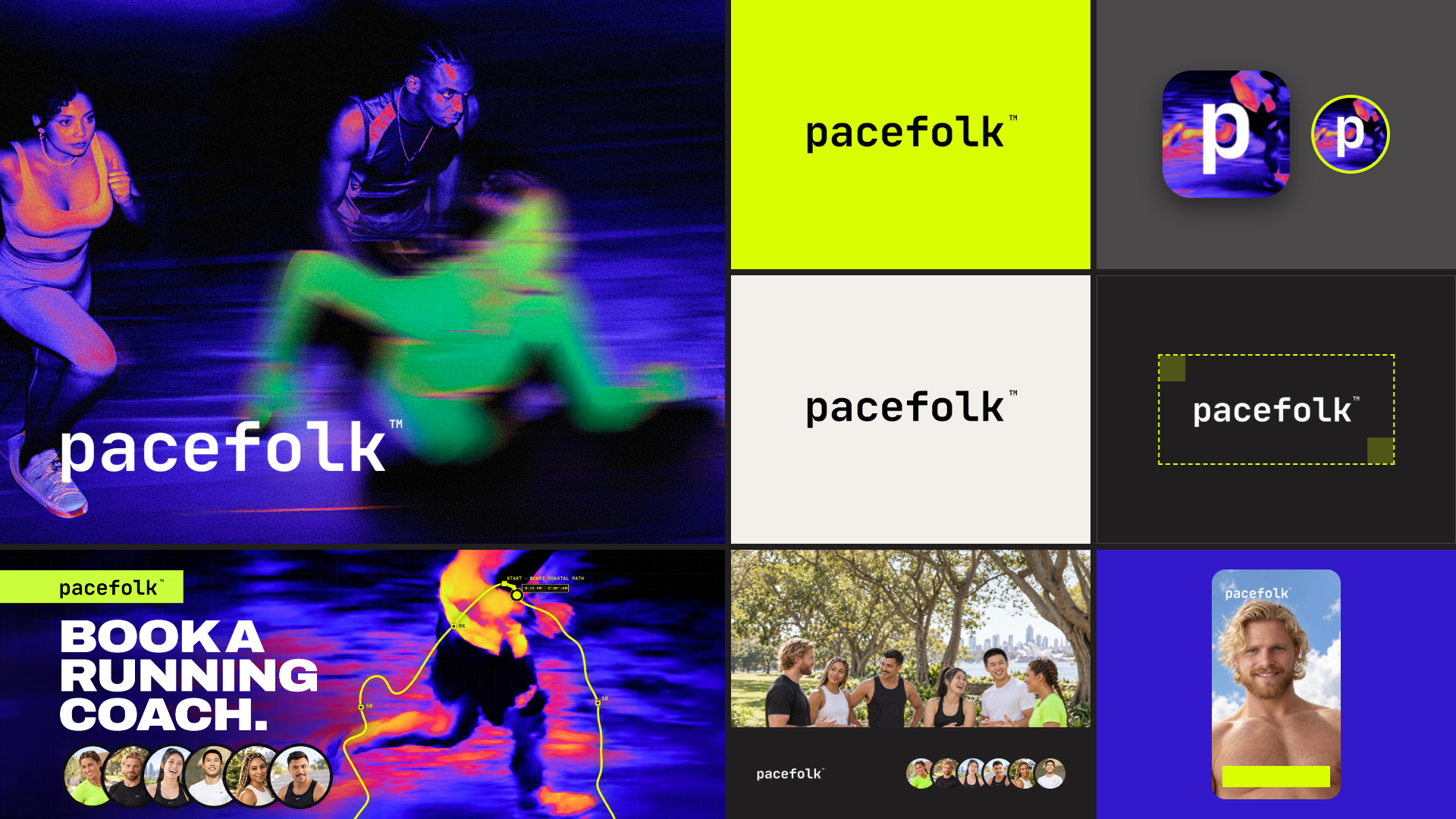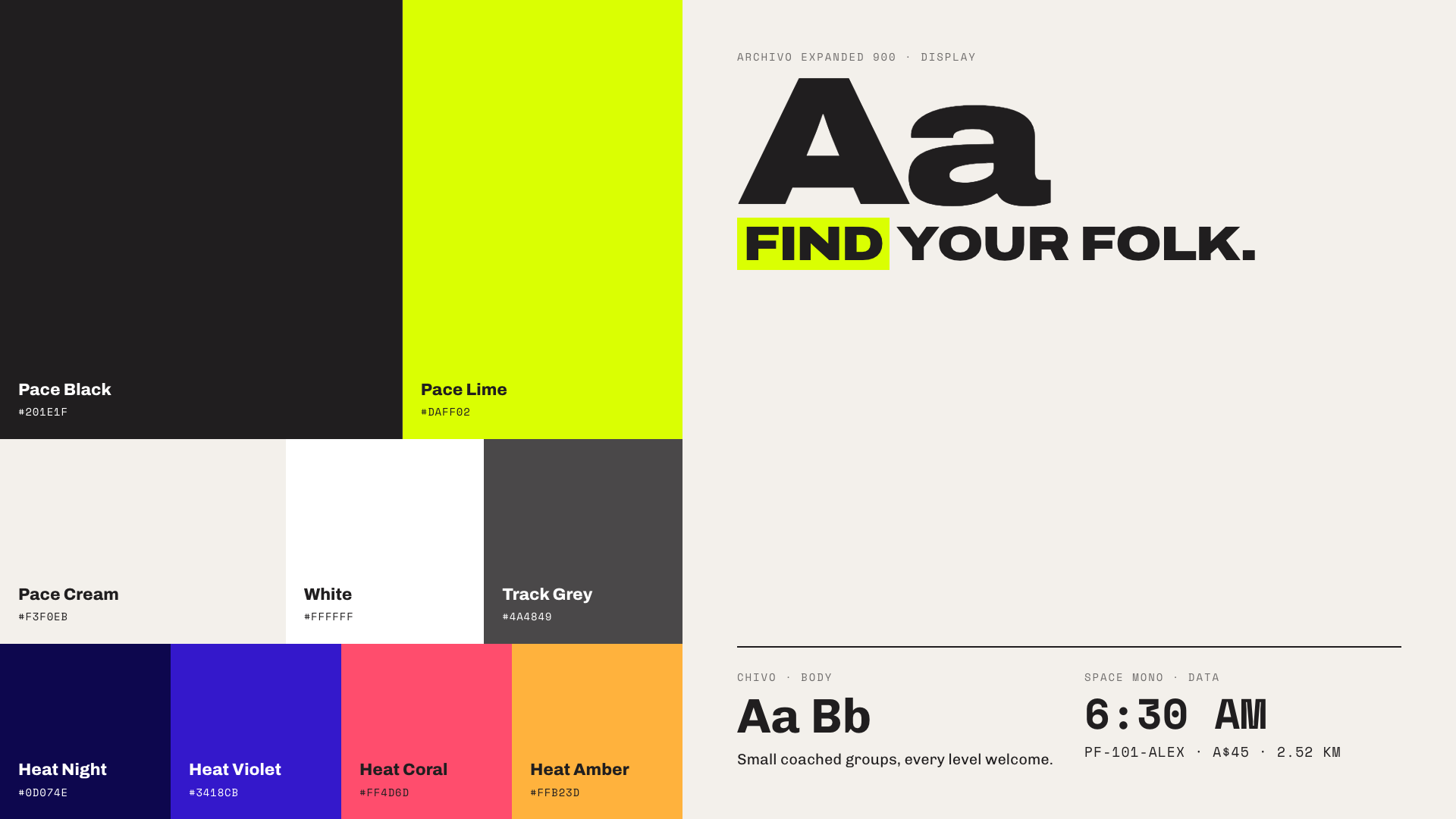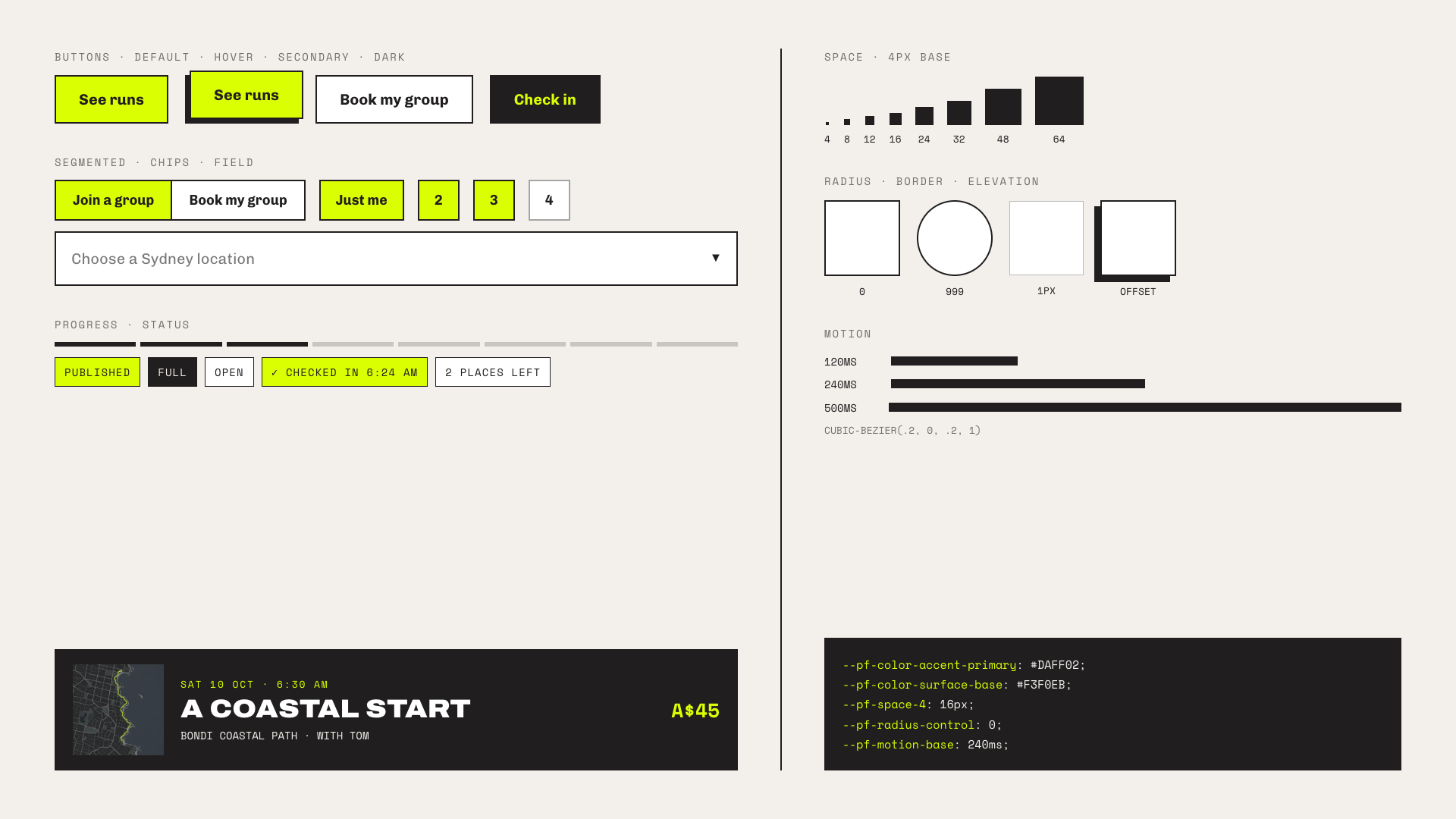
Pacefolk — 2026
Pacefolk
Community service and sponsorship design
Run clubs became culture before they became infrastructure.
The commercial system behind independent running communities. Run clubs have become one of the most interesting cultural spaces in modern fitness. They are social before they are transactional: a recurring ritual, a local identity, a way to meet people, and increasingly a place where brands want to show up. The irony is that the communities themselves can still be run through an Instagram account, a spreadsheet, a WhatsApp chat and an organiser doing heroic unpaid admin.
The obvious commercial response is a sponsorship marketplace. Put clubs in a directory, let brands browse them, add a contact button and take a fee. That is efficient on paper and potentially corrosive in practice. It turns a community into inventory and asks the organiser to become a salesperson just to access value created by the club.
Pacefolk starts with the opposite rule: the club must get useful infrastructure before a sponsor exists. The commercial layer earns the right to sit on top of the community layer.
Build the club operating system first
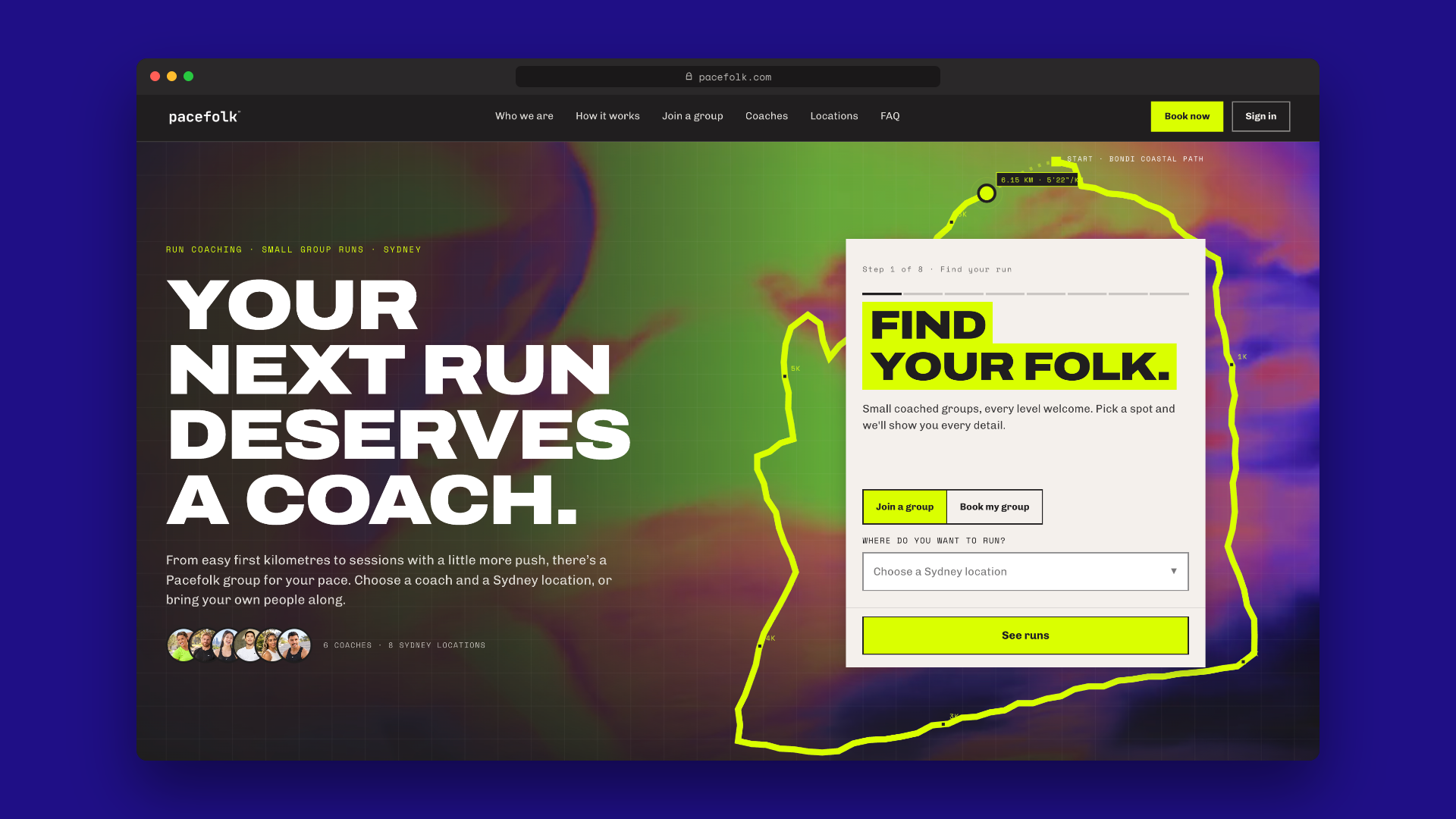
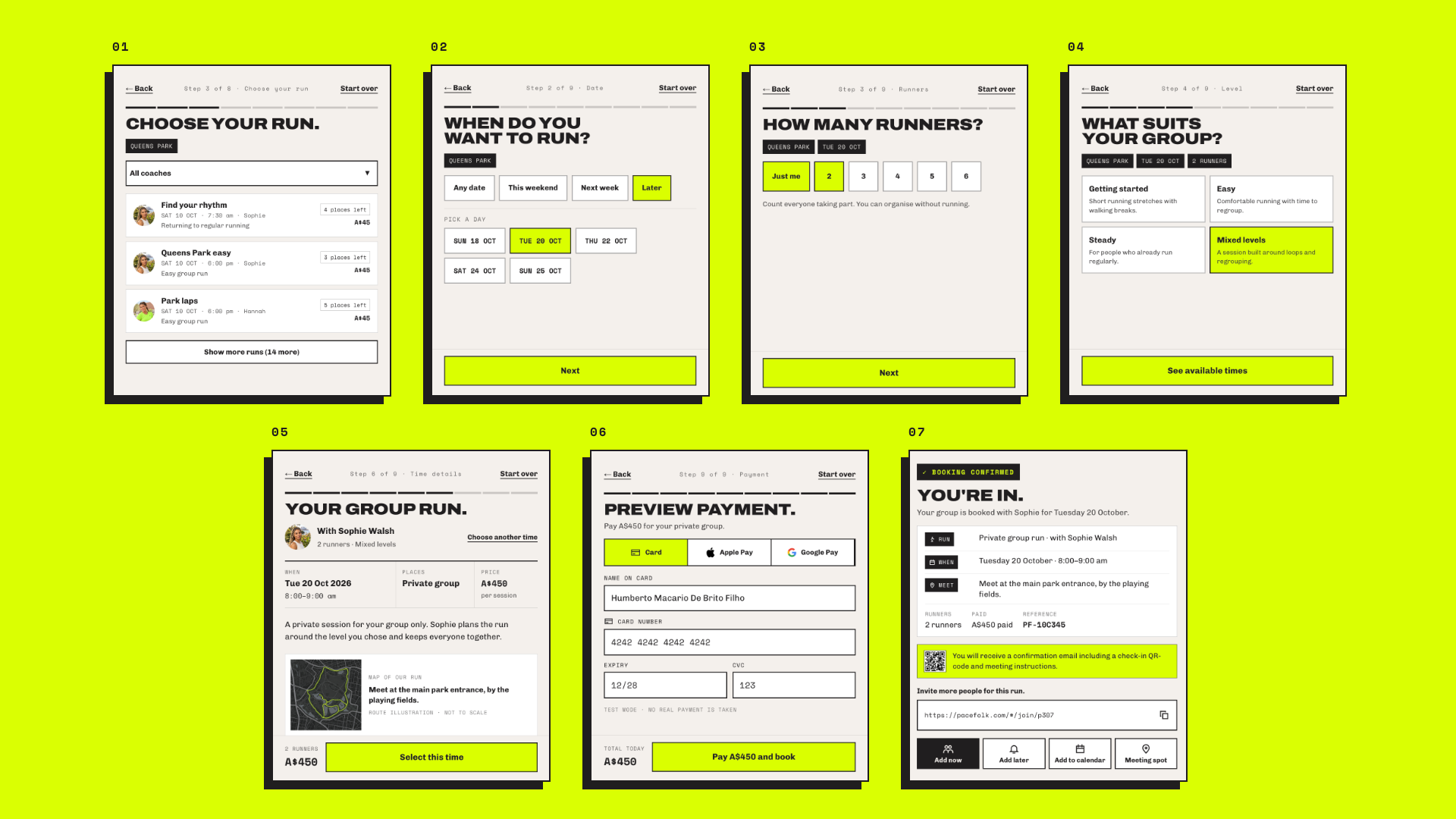
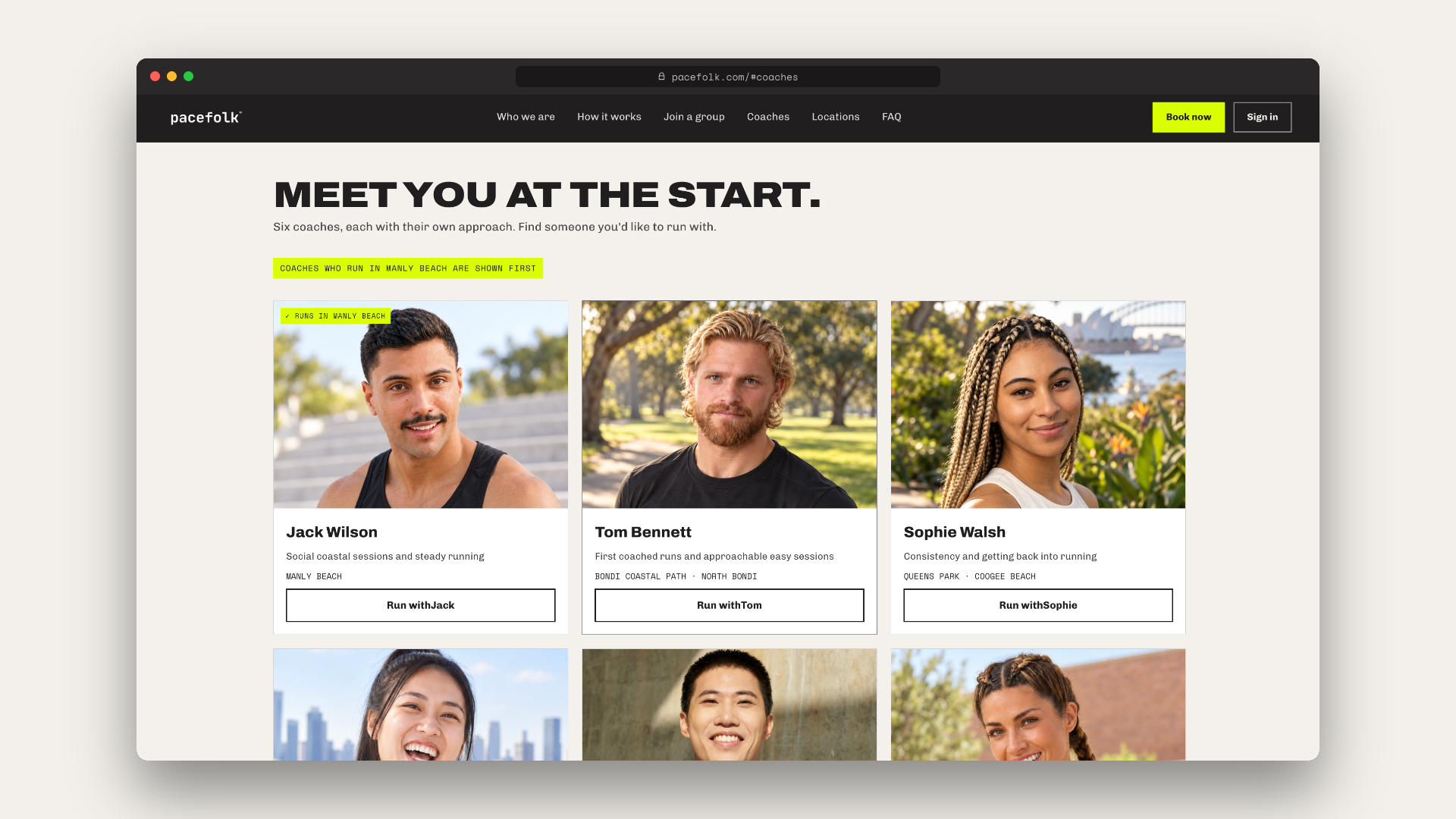
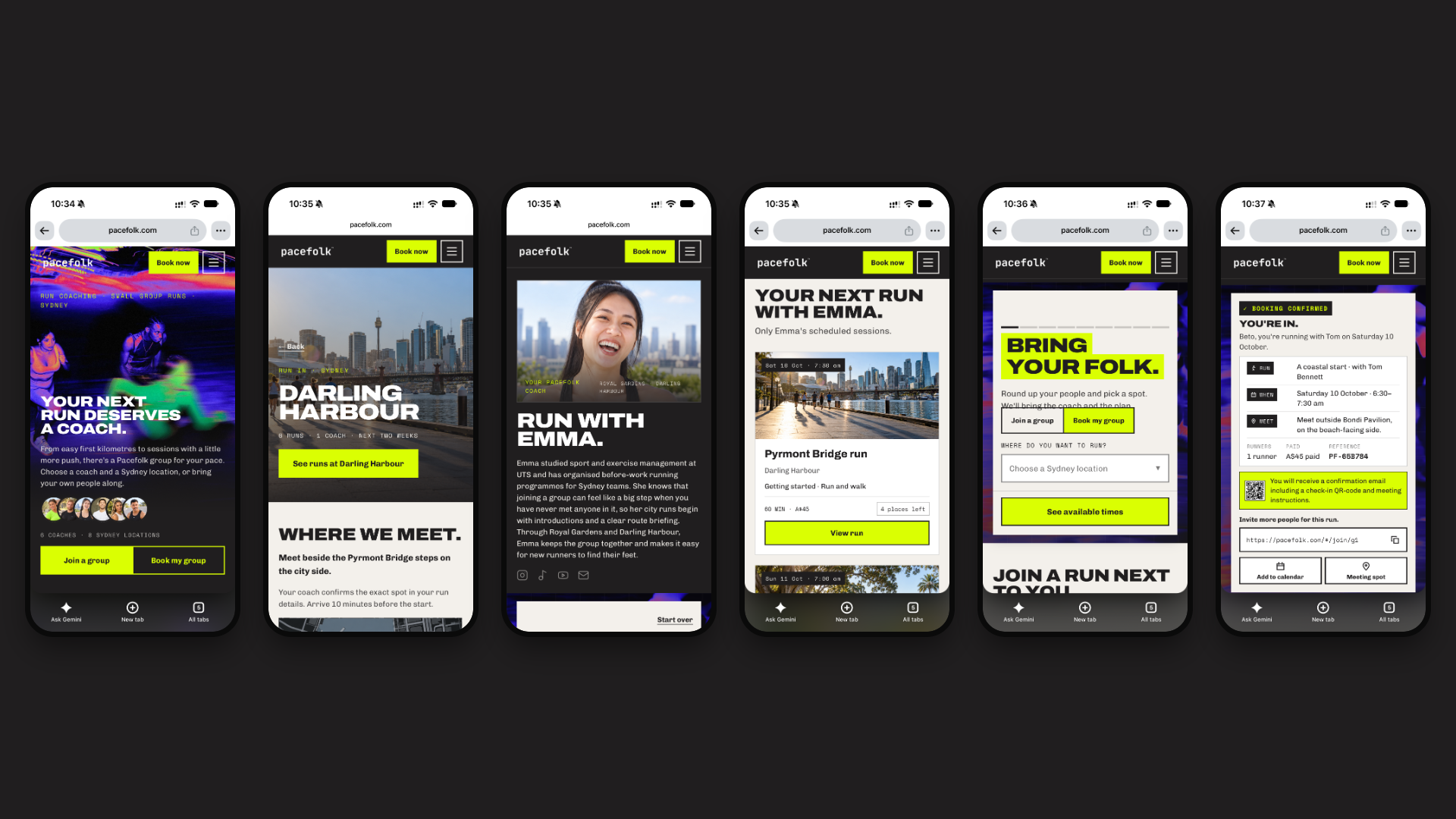
Clubs receive a free operating workspace for the work they already do: public profile, recurring runs, one-off events, RSVP, QR check-in, attendance, team roles, communications, official media, weather, event readiness, gifts, sponsor opportunities, incidents and reporting. Runner access is free as well. A person can discover an open run, express intent, check in and participate without being forced into a paid relationship.
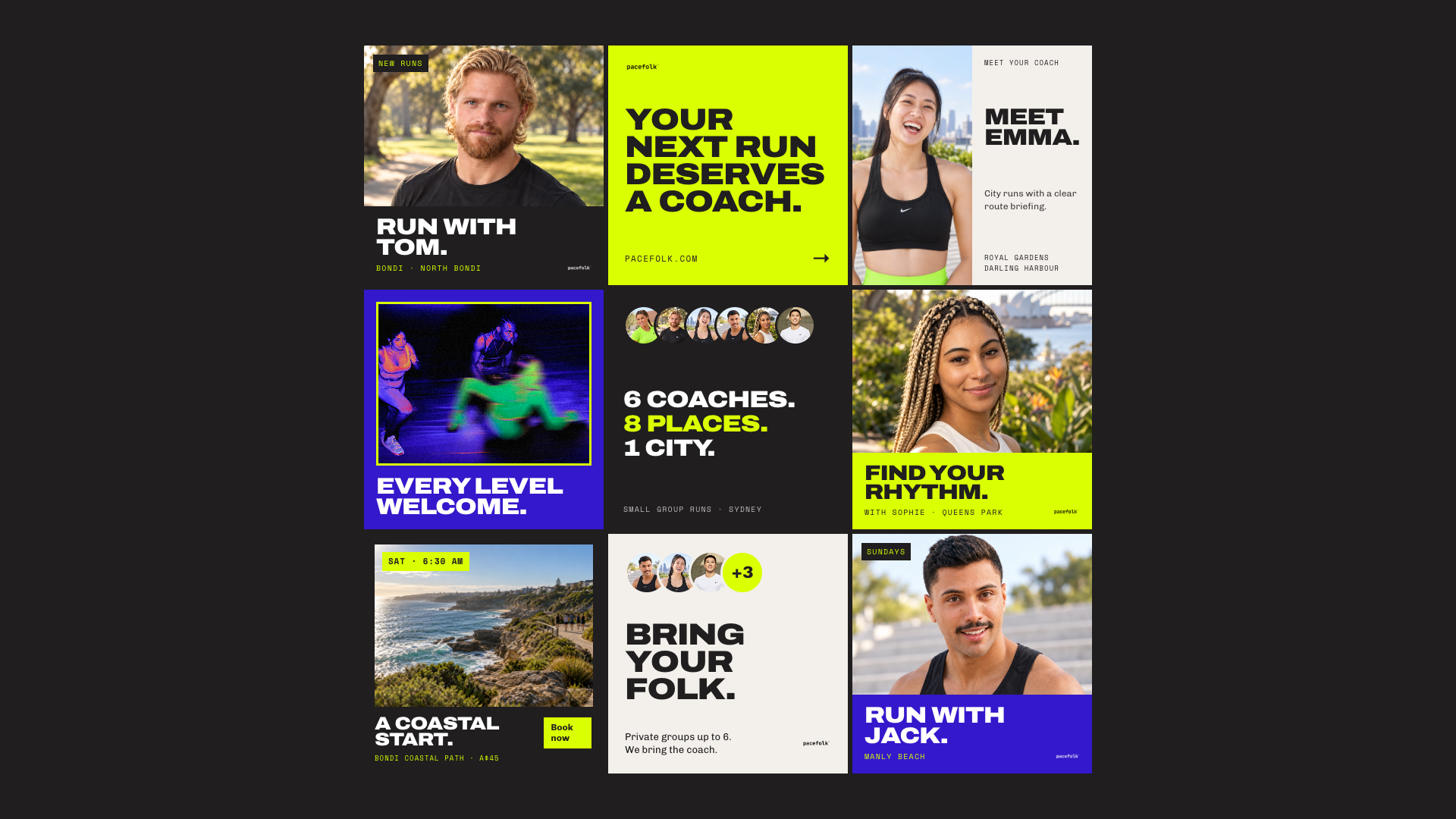
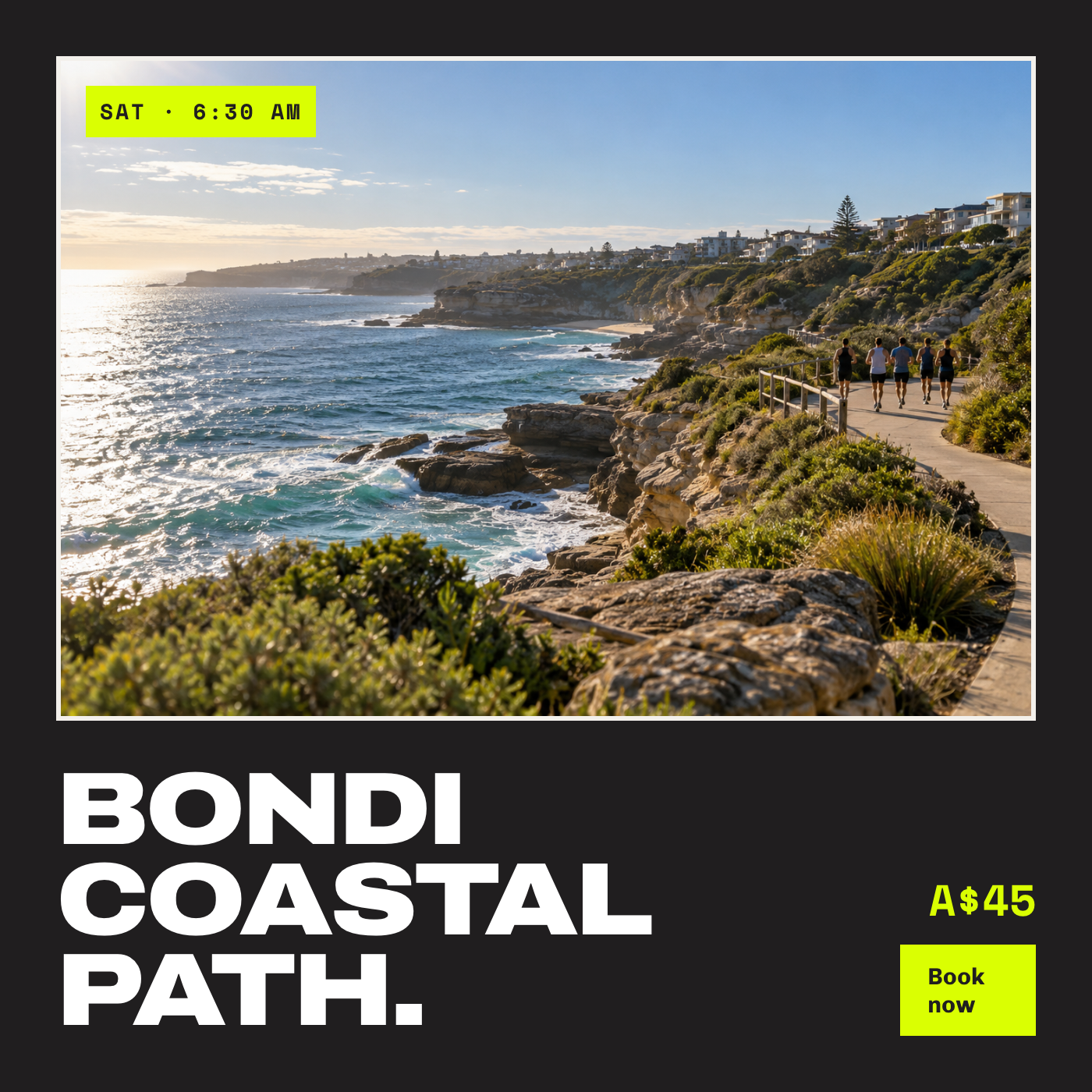
The Run Desk is designed as an operational surface rather than a generic dashboard. It leads with the next event, countdown, registrations, attendance forecast, weather, readiness, team, missing tasks and one primary action. Publishing can generate an Event Pack containing the poster, check-in QR, story sequence, WhatsApp-ready copy and event-day material from the same structured event record. Organisers correct facts once and regenerate outputs rather than editing disconnected artwork.
The system becomes more useful as the event approaches. A 48-hour Run Brief can show registrations, first-time and returning runners, historical show-up behaviour, forecast range, weather, assigned roles and missing tasks. The 24-hour version gets shorter and more urgent. Event-Day Mode prioritises check-in, live attendance, offline queue, team, materials and incident actions. Post-run closeout is designed to be completed in minutes so verified participation, estimates, volunteers, product distribution and issues are captured while memory is still fresh.
Proof before sponsorship
Attendance is treated carefully because it later becomes commercial evidence. RSVP is not attendance. An organiser estimate is not a verified check-in. A repeated scan should not inflate a count. Offline records can wait to sync. Forecasts appear as ranges with confidence rather than as made-up precision. That level of operational honesty creates the foundation for a brand report that is useful precisely because it distinguishes what actually happened from what was expected.
The runner experience follows the same principle. Milestones and streaks can create identity and retention, but Pacefolk avoids turning clubs into public performance leaderboards. The system can celebrate participation without exposing cross-club behaviour or making a recreational community feel like a competition database.
The commercial reveal
Brands do not browse a raw directory of clubs or buy member data. Pacefolk acts as a curated commercial operator. It identifies appropriate opportunities, packages real dates and deliverables, protects funding, manages agreements, coordinates product and media requirements, verifies delivery and prepares the report. Clubs state what kinds of collaboration they are open to — sampling, gifting, mixed product and cash, paid sponsorship, series or annual relationships — without needing to build their own sponsorship deck.
The business is funded by brands and agencies, not by clubs or runners. Revenue can come from annual brand partnerships, campaign management, network coordination, production, media rights, category exclusivity, insights and renewal. Critically, club cash, expenses, gifted product and Pacefolk fees remain separate. The platform cannot quietly improve its margin by shrinking the community benefit after the agreement is made.
Operational boundaries also protect the platform. Random draws and chance-based prize allocation are prohibited. Sensitive product categories can be blocked. Media rights, guardian consent, incident handling and country rules are explicit. Photographers receive real briefs and rights terms. Sponsorship is not a decorative layer; it becomes a managed service with responsibilities.
AI as leverage
Pacefolk uses AI where a small operating team would otherwise drown in preparation. It can research potential clubs and brands, structure information, match opportunities, prepare proposals, flag omissions, draft reports, surface renewal opportunities and assemble a daily priority brief. But the permission model is explicit: some tasks can run automatically, some can only be prepared for approval, and protected actions stay human-only. Sending outreach, committing a price, approving legal terms, executing a contract, moving money or closing an incident are not delegated away.
Automate preparation, not accountability.
What the work proves
Pacefolk is the clearest example in this collection of designing a business, a service and a product at the same time. The visible interface is only a fraction of the work. Behind a Thursday morning run sits event operations, community identity, data integrity, sponsorship inventory, rights, finance, safety, reporting and renewal logic.
The creative challenge is making all of that feel lighter than it is. Runners should feel community. Organisers should feel supported. Brands should feel confidence. The system absorbs complexity so each audience sees the part they actually need.
My contribution
Product and service strategy; club, organiser, runner, brand, agency and photographer journeys; free Club OS; Run Desk; QR check-in and attendance integrity; Event Pack and readiness system; milestones; sponsorship inventory and commercial model; campaign operations; reporting and rights; privacy/consent and safety rules; AI operating model; operator workflow; design-system direction; and end-to-end product architecture.
- Year
- 2026
- Scope
- Community service and sponsorship design
- Client
- Pacefolk
- Role
Company Strategy
Service Design
Sponsorship Model
Design System
Run clubs became culture before they became infrastructure.
The commercial system behind independent running communities. Run clubs have become one of the most interesting cultural spaces in modern fitness. They are social before they are transactional: a recurring ritual, a local identity, a way to meet people, and increasingly a place where brands want to show up. The irony is that the communities themselves can still be run through an Instagram account, a spreadsheet, a WhatsApp chat and an organiser doing heroic unpaid admin.
The obvious commercial response is a sponsorship marketplace. Put clubs in a directory, let brands browse them, add a contact button and take a fee. That is efficient on paper and potentially corrosive in practice. It turns a community into inventory and asks the organiser to become a salesperson just to access value created by the club.
Pacefolk starts with the opposite rule: the club must get useful infrastructure before a sponsor exists. The commercial layer earns the right to sit on top of the community layer.
Build the club operating system first
Clubs receive a free operating workspace for the work they already do: public profile, recurring runs, one-off events, RSVP, QR check-in, attendance, team roles, communications, official media, weather, event readiness, gifts, sponsor opportunities, incidents and reporting. Runner access is free as well. A person can discover an open run, express intent, check in and participate without being forced into a paid relationship.
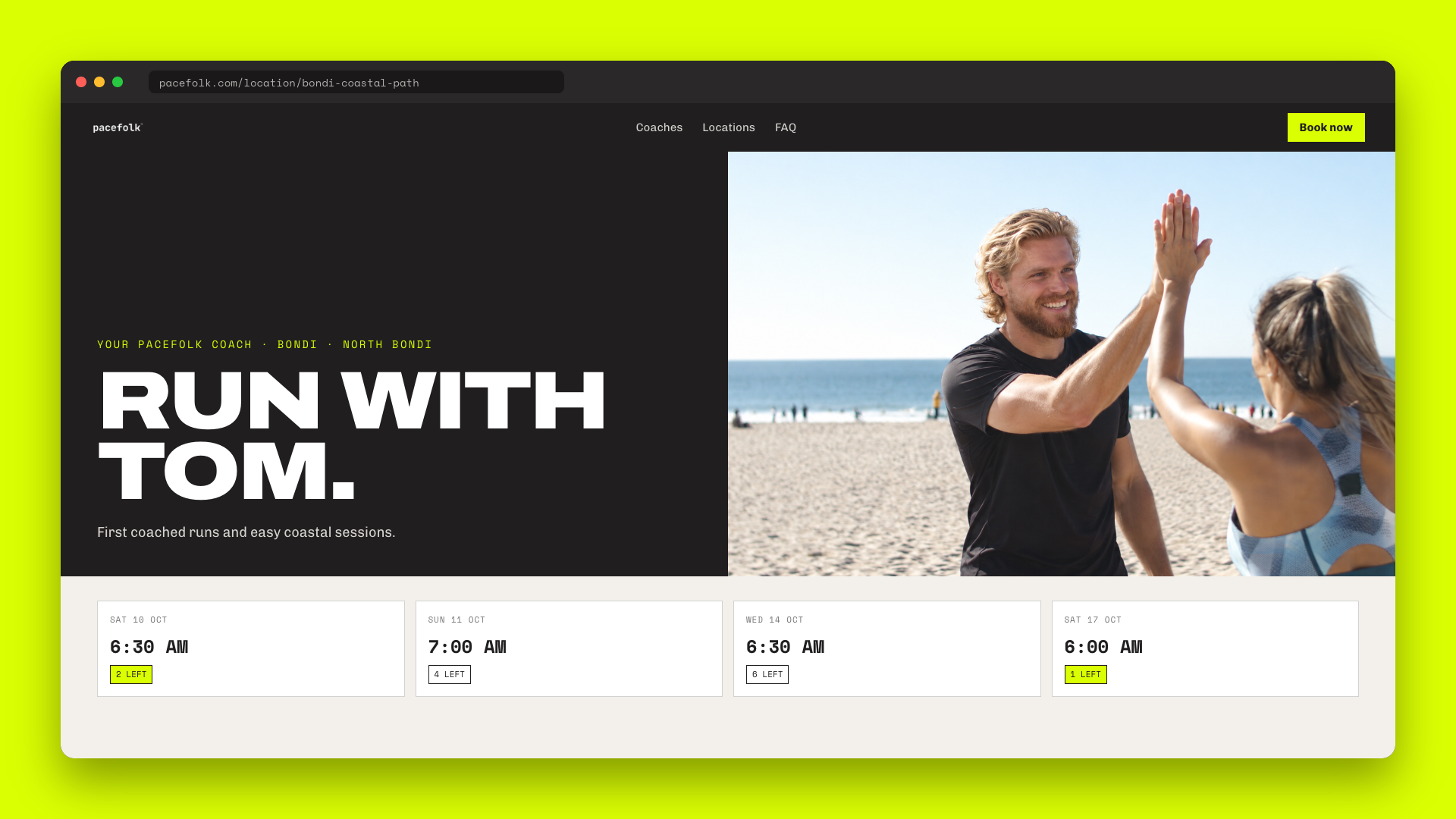
The Run Desk is designed as an operational surface rather than a generic dashboard. It leads with the next event, countdown, registrations, attendance forecast, weather, readiness, team, missing tasks and one primary action. Publishing can generate an Event Pack containing the poster, check-in QR, story sequence, WhatsApp-ready copy and event-day material from the same structured event record. Organisers correct facts once and regenerate outputs rather than editing disconnected artwork.
The system becomes more useful as the event approaches. A 48-hour Run Brief can show registrations, first-time and returning runners, historical show-up behaviour, forecast range, weather, assigned roles and missing tasks. The 24-hour version gets shorter and more urgent. Event-Day Mode prioritises check-in, live attendance, offline queue, team, materials and incident actions. Post-run closeout is designed to be completed in minutes so verified participation, estimates, volunteers, product distribution and issues are captured while memory is still fresh.
Proof before sponsorship
Attendance is treated carefully because it later becomes commercial evidence. RSVP is not attendance. An organiser estimate is not a verified check-in. A repeated scan should not inflate a count. Offline records can wait to sync. Forecasts appear as ranges with confidence rather than as made-up precision. That level of operational honesty creates the foundation for a brand report that is useful precisely because it distinguishes what actually happened from what was expected.
The runner experience follows the same principle. Milestones and streaks can create identity and retention, but Pacefolk avoids turning clubs into public performance leaderboards. The system can celebrate participation without exposing cross-club behaviour or making a recreational community feel like a competition database.
The commercial reveal
Brands do not browse a raw directory of clubs or buy member data. Pacefolk acts as a curated commercial operator. It identifies appropriate opportunities, packages real dates and deliverables, protects funding, manages agreements, coordinates product and media requirements, verifies delivery and prepares the report. Clubs state what kinds of collaboration they are open to — sampling, gifting, mixed product and cash, paid sponsorship, series or annual relationships — without needing to build their own sponsorship deck.
The business is funded by brands and agencies, not by clubs or runners. Revenue can come from annual brand partnerships, campaign management, network coordination, production, media rights, category exclusivity, insights and renewal. Critically, club cash, expenses, gifted product and Pacefolk fees remain separate. The platform cannot quietly improve its margin by shrinking the community benefit after the agreement is made.
Operational boundaries also protect the platform. Random draws and chance-based prize allocation are prohibited. Sensitive product categories can be blocked. Media rights, guardian consent, incident handling and country rules are explicit. Photographers receive real briefs and rights terms. Sponsorship is not a decorative layer; it becomes a managed service with responsibilities.
AI as leverage
Pacefolk uses AI where a small operating team would otherwise drown in preparation. It can research potential clubs and brands, structure information, match opportunities, prepare proposals, flag omissions, draft reports, surface renewal opportunities and assemble a daily priority brief. But the permission model is explicit: some tasks can run automatically, some can only be prepared for approval, and protected actions stay human-only. Sending outreach, committing a price, approving legal terms, executing a contract, moving money or closing an incident are not delegated away.
Automate preparation, not accountability.
What the work proves
Pacefolk is the clearest example in this collection of designing a business, a service and a product at the same time. The visible interface is only a fraction of the work. Behind a Thursday morning run sits event operations, community identity, data integrity, sponsorship inventory, rights, finance, safety, reporting and renewal logic.
The creative challenge is making all of that feel lighter than it is. Runners should feel community. Organisers should feel supported. Brands should feel confidence. The system absorbs complexity so each audience sees the part they actually need.
My contribution
Product and service strategy; club, organiser, runner, brand, agency and photographer journeys; free Club OS; Run Desk; QR check-in and attendance integrity; Event Pack and readiness system; milestones; sponsorship inventory and commercial model; campaign operations; reporting and rights; privacy/consent and safety rules; AI operating model; operator workflow; design-system direction; and end-to-end product architecture.